
House in Disrepair? How to Sell Without Leaving Money on the Table
TL;DR
- A house in disrepair can still sell, often through an as-is listing, targeted repairs, or an investor sale.
- The right path depends on a homeowner’s timeline, budget, and how much of the work they want to coordinate.
- Strategic, high-ROI home repairs (paint, carpet, minor repairs) can sometimes net you tens of thousands more than selling as-is.
- Cash offers from investors are fast but typically come at a steep discount, so knowing how they price a home helps you negotiate.
- Jake Maines Realty’s Sell Ready Program can fund and manage costly repairs upfront, so you only pay at closing.
- What Does "House in Disrepair" Actually Mean For Sellers?
- Is It Even Possible To Sell a House That Needs Work?
- Your Three Main Options When Selling a House In Poor Condition
- What Repairs Actually Move The Needle (And Which Ones Don't)?
- How Buyers And Investors Price a House In Disrepair
- Should You Be Worried About Disclosure Requirements?
- Watch Out: Risks That Can Cost You When Selling As-Is
- Jake’s Take
- How Jake Maines Realty's Sell Ready Program Works For Homes That Need Work
- Are Zillow Estimates Accurate For a House in Disrepair?
-
Frequently asked questions
- What is the minimum condition a home needs to be listed on the MLS?
- How long does an as-is sale typically take in Virginia Beach?
- Can a buyer's lender kill a deal on a distressed home even after the offer is accepted?
- What does "good bones" mean in a real estate context?
- Do I have to fix code violations before selling my house?
What Does "House in Disrepair" Actually Mean For Sellers?

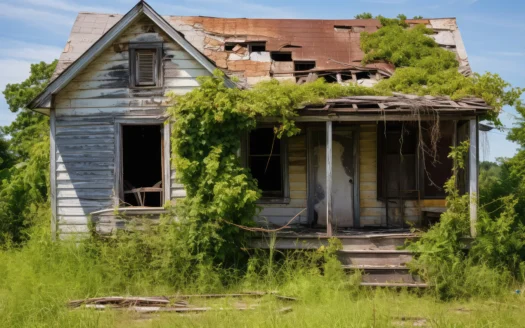
A house with disrepair issues is any home with deferred maintenance, visible damage, or systems that are past their useful life. It could be cosmetic (peeling paint, worn carpets), functional (a leaky roof, electrical issues), or structural (foundation cracks, significant water damage). For a seller, the label matters because it directly affects how the home is priced, marketed, and financed in its current condition.
Buyers and lenders see a distressed property as one that needs work before it meets standard living conditions. A Rocket Mortgage overview notes that these homes often fall outside conventional loan guidelines, which means a smaller pool of qualified buyers and a lower fair market value. That doesn’t mean you can’t sell it, but it does mean you need a strategy to handle the disrepair claim.
Understanding the true condition of your home is the first step. From there, you can decide whether to list it as-is, invest in targeted repairs, or sell directly to an investor to move your house fast. I walk sellers through these scenarios every day, starting with a realistic assessment of what the home could fetch in its current state versus what it could fetch after a few smart updates. If you’re thinking about selling a home that shows its age, the worst thing you can do is guess, but I can help you get real numbers first.
Is It Even Possible To Sell a House That Needs Work?
Homes in poor condition sell all the time, but the real question is which path gives you the best financial outcome and the least stress. Sellers have three main routes, which are to list as-is on the open market, make targeted improvements to address housing disrepair before listing, or accept a cash offer from an investor. Each comes with trade-offs in speed, sale price, and effort.
I’ve seen sellers panic and accept the first lowball cash offer because they assume nobody else will buy the home, but that’s rarely the whole story. A Reddit thread of real-world experiences shows that even homes with outdated kitchens, old roofs, and cosmetic neglect can attract traditional home buyers when they’re priced correctly. Meanwhile, the same Rocket Mortgage distressed property guide confirms that as-is listings are common and that many buyers actively look for homes they can renovate for a fair offer. The key is understanding what your house is worth right now, what it could be worth with a few strategic fixes, and how those numbers compare to the investor offers you might receive.
Your Three Main Options When Selling a House In Poor Condition

Each path has a clear profile, and the table below compares them by speed, typical sale price, required effort, and the seller scenario that fits best.
| Option | Typical Speed | Likely Sale Price | Effort for Seller | Best Fit When… |
|---|---|---|---|---|
| List as-is on the MLS | 30 to 60+ days | Moderate (below market but above investor offers) | Low (no repairs, but must manage showings) | You want more than a cash offer and can wait for a buyer who can finance or pay cash. |
| Make targeted pre-sale repairs | 45 to 90 days | Highest (closer to full market value) | Moderate (you or your agent coordinates repairs) | You have a little time and want to maximize your net proceeds. |
| Cash offer from an investor | 7 to 14 days | Lowest (often 50% to 70% of the after-repair value minus profit) | Very low (sell as-is, fast close) | Speed is everything, and you cannot or will not make any repairs. |
Before you decide, get a clear picture of your home’s current value and its potential after repairs. You can start with a quick home value estimate and then talk to an agent who knows the local market. I often find that sellers underestimate the gap between what an investor will pay and what a prepared home sale can bring.
What Repairs Actually Move The Needle (And Which Ones Don't)?
The repairs that boost your property value and sale price the most are cosmetic and functional fixes with a high return, not major overhauls of structural problems. Fresh paint, new carpet, updated light fixtures, and fixing obvious leaks or broken windows almost always pay for themselves. Expensive projects like a full kitchen remodel or foundation repair, however, rarely return their full cost in a pre-sale scenario.
I’ve seen this play out with real numbers. One of my clients needed to sell but didn’t have the cash for repairs. Her home needed paint, wall repairs, and new carpet. We identified roughly $15,000 in strategic improvements, coordinated the work, and launched a full MLS listing. The result was that the home sold for $50,000 more than the estimated as-is price, putting an extra $35,000 net in her pocket. That’s not a guess, but a documented outcome. The lesson is that you don’t have to fix everything. Instead, it’s essential to focus on what buyers see, smell, and feel when they walk through the door. A clean, bright, and functional home sells faster and for more, even if the roof has only a few years left. I’ve written a guide on what you need to know if you’re planning to sell your house as-is.
How Buyers And Investors Price a House In Disrepair

Investors use a simple formula, and the after-repair value (ARV) minus repair costs minus their profit margin equals the maximum they’ll offer. If a home is worth $300k fixed up, needs $50k in work, and the investor wants a $40k profit, their offer will land around $210k. That’s why cash offers are always deeply discounted.
Understanding this math puts you in a stronger position. When you know the investor’s fix-and-flip calculation, you can compare their offer to what you might net by doing some of those repairs yourself. Even a partial renovation, financed through a program that lets you pay at closing, can shift thousands of dollars back to your side of the table, and the right one is hassle-free. Some investors also use financing strategies that let them buy with little money down, so they aren’t always cash-heavy, and their offers may be more negotiable. I always recommend that sellers run the numbers themselves, even roughly, so they can spot whether an investor’s offer is fair or just opportunistic.
Should You Be Worried About Disclosure Requirements?
No, proper disclosure protects you far more than it hurts your sale. Virginia law requires sellers to disclose known material defects, and being upfront builds buyer trust while reducing the risk of legal action after closing. Hiding problems and property damage is what gets sellers into trouble.
The Pennsylvania Association of Realtors’ distressed property guidance (which mirrors best practices in most states) emphasizes that full disclosure is a risk-management tool. When you tell a buyer exactly what’s wrong, they can’t later claim you concealed a defect. For a house in disrepair, this is even more important, as an inspection will likely uncover issues anyway. I guide my sellers through the disclosure forms so nothing is missed. The goal is to sell the home with a clear conscience and a clean legal record.
Watch Out: Risks That Can Cost You When Selling As-Is

The biggest risks are lowball cash offers that look convenient, home inspection contingencies used to renegotiate after you’ve already accepted a deal, and auction scenarios that leave you with far less than the home could fetch on the open market. Selling as-is doesn’t mean selling blindly.
A Reddit discussion among real estate professionals warns that some cash buyers will tie up a property and then chip away at the price during the inspection period. Others highlight that auction platforms and foreclosure listings often attract bargain hunters expecting steep discounts. If you go the as-is route, price your home realistically, vet your buyer, and understand that any offer with a financing or inspection contingency can still be renegotiated. The safest path is to work with a real estate agent who knows how to qualify offers and protect your bottom line.
Jake’s Take
The worst thing you can do with a house that needs work is to guess. Guessing is how sellers panic and take the first lowball offer, convinced nobody else will want it, but that’s almost never true. I’ve sold plenty of homes that showed their age, and the difference was always the same: knowing the as-is and improved numbers before making a move. The reason most people sell as is when they shouldn’t is cash, plain and simple. Sell Ready removes that barrier, because my team funds and manages the work, and you pay at closing. You don’t need money to make money in your home. You need the right plan and someone to run it.
How Jake Maines Realty's Sell Ready Program Works For Homes That Need Work

You don’t need cash up front to get your home ready for a top-dollar sale. My Sell Ready Program is a six-step process designed specifically for sellers whose homes need work. I evaluate the property personally, then give you the numbers based on what it would sell for as-is, and what it could sell for after targeted improvements. From there, we identify exactly which repairs are the right choices, and my team coordinates everything, including contractors, materials, and scheduling. You don’t write a check until closing.
The program is how we turned my client’s $15,000 investment into a $50,000 price increase. We painted, replaced carpet, and fixed the walls. She never had to manage a single contractor. Once the work was done, we launched a full MLS marketing push and attracted multiple offers. The result was a net gain of $35,000 that she would’ve left on the table if she’d sold as-is. That’s the power of pairing a strategic repair plan with professional listing execution. If your home needs work and you’re curious what the two numbers look like for you, I’m happy to walk you through it. The Sell Ready Program is built for this exact situation.
Are Zillow Estimates Accurate For a House in Disrepair?
No, automated valuation models like Zillow’s Zestimate are notoriously unreliable for homes in poor condition. They rely on public records and neighborhood averages, and they can’t see the peeling paint, the water-stained ceiling, or the outdated wiring. For a distressed property, an online estimate is often thousands of dollars off, sometimes tens of thousands.
The HomeLight guide to distressed listings confirms that algorithm-based tools struggle with homes that fall outside the norm. I’ve seen Zestimates overvalue a house in disrepair by assuming it’s in average condition, which sets unrealistic expectations. The reverse can also happen, where a home with solid bones but cosmetic neglect gets undervalued. A professional home value estimate combined with an agent’s in-person walkthrough is the only way to get a reliable baseline, and that’s where I start every seller conversation.

Jake Maines is a Virginia Beach Realtor known for his market knowledge and exceptional client service. His real estate journey, beginning in 2020, showcases a successful transition from marketing to realty and investing, marked by a passion for helping clients find their dream homes. Recognized as one of Inside Business 40 Under 40 and ranking in the top 8% of Hampton Roads Realtors in his first year, Jake's accolades affirm his expertise. A member of NAR and HRRA, he upholds the highest ethical standards. Community involvement and continuous professional development make him a trusted, authoritative Virginia Beach real estate expert.
Frequently asked questions
What is the minimum condition a home needs to be listed on the MLS?
There’s no universal condition requirement for the MLS. Even a home with major structural issues can be listed, provided the seller discloses known defects. However, many lenders have minimum property standards, so a severely deteriorated home may be eligible only for a cash sale or renovation loans. I can help you determine whether your home qualifies for conventional financing or whether a cash or investor sale is more realistic.
How long does an as-is sale typically take in Virginia Beach?
As-is sales in Virginia Beach can close in as little as two to four weeks with a cash buyer, or 30 to 60 days with a financed buyer. The timeline depends on how the home is priced and marketed. Overpricing a distressed property will stall the sale, while a realistic price attracts investors and renovation-minded buyers more quickly. I price as-is homes based on recent comparable sales of similar condition, not on what a remodeled house down the street sold for.
Can a buyer's lender kill a deal on a distressed home even after the offer is accepted?
Yes, if the appraisal reveals condition issues that don’t meet the lender’s minimum property requirements (such as a failed roof, missing flooring, or non-functioning HVAC), the loan can be denied. This is a common pitfall for sellers who accept an offer with a financing contingency. To avoid it, I vet buyers carefully and often recommend cash offers or renovation loans for homes with significant repair needs. If you’re buying a home in Virginia Beach yourself, the same principle applies in reverse.
What does "good bones" mean in a real estate context?
“Good bones” refers to a home whose fundamental structure and layout are sound, even if the surfaces and systems are outdated or worn. The phrase comes from the idea that the house’s skeleton (foundation, framing, roof structure, floor plan) is solid, so cosmetic and mechanical updates are worthwhile. For a seller, highlighting that a house in disrepair has good bones can attract buyers who want a project without the risk of major structural headaches.
Do I have to fix code violations before selling my house?
You aren’t legally required to bring every old code violation up to current standards just to sell, but you must disclose known violations. However, many lenders and insurance companies will flag open permits or serious safety hazards, which can delay or block a sale. If a violation is a safety issue (exposed wiring, missing handrails, non-compliant stairs), addressing it in advance often removes a deal-killing objection. I help sellers identify which violations are worth fixing and which can be disclosed and priced into the sale.